Platform comparison
| Platform | YES odds | NO odds | Fee | KYC | Settlement | |
|---|---|---|---|---|---|---|
Polymarket (via Polymarket Alternative) Pick polygram.ink (preferred broker) |
41% | 59% | 0% (USDC on-chain) | No-KYC up to $1,500 | USDC, auto via UMA oracle | Open the market → |
Polymarket (direct) polymarket.com |
41% | 59% | 0% | Geo-blocked in US/UK/EU | USDC, on-chain | Open the market → |
Kalshi kalshi.com |
— | — | Up to 7% per trade | US-only, KYC required | USD | Open the market → |
Betfair Exchange betfair.com |
— | — | 2-5% commission | Full KYC from first trade | GBP / EUR | Open the market → |
Manifold Markets manifold.markets |
— | — | Play-money (mana) | None — play-money | Mana (no cash-out) | Open the market → |
Outcome probabilities
Current market-implied probability for each outcome, from the live order book.
| Outcome | Probability |
|---|---|
| 28°C | 41% |
| 29°C | 28% |
| 27°C | 21% |
| 30°C | 7% |
| 31°C | 2% |
| 25°C or below | 0% |
| 26°C | 0% |
| 32°C | 0% |
| 33°C | 0% |
| 34°C | 0% |
| 35°C or higher | 0% |
Market context
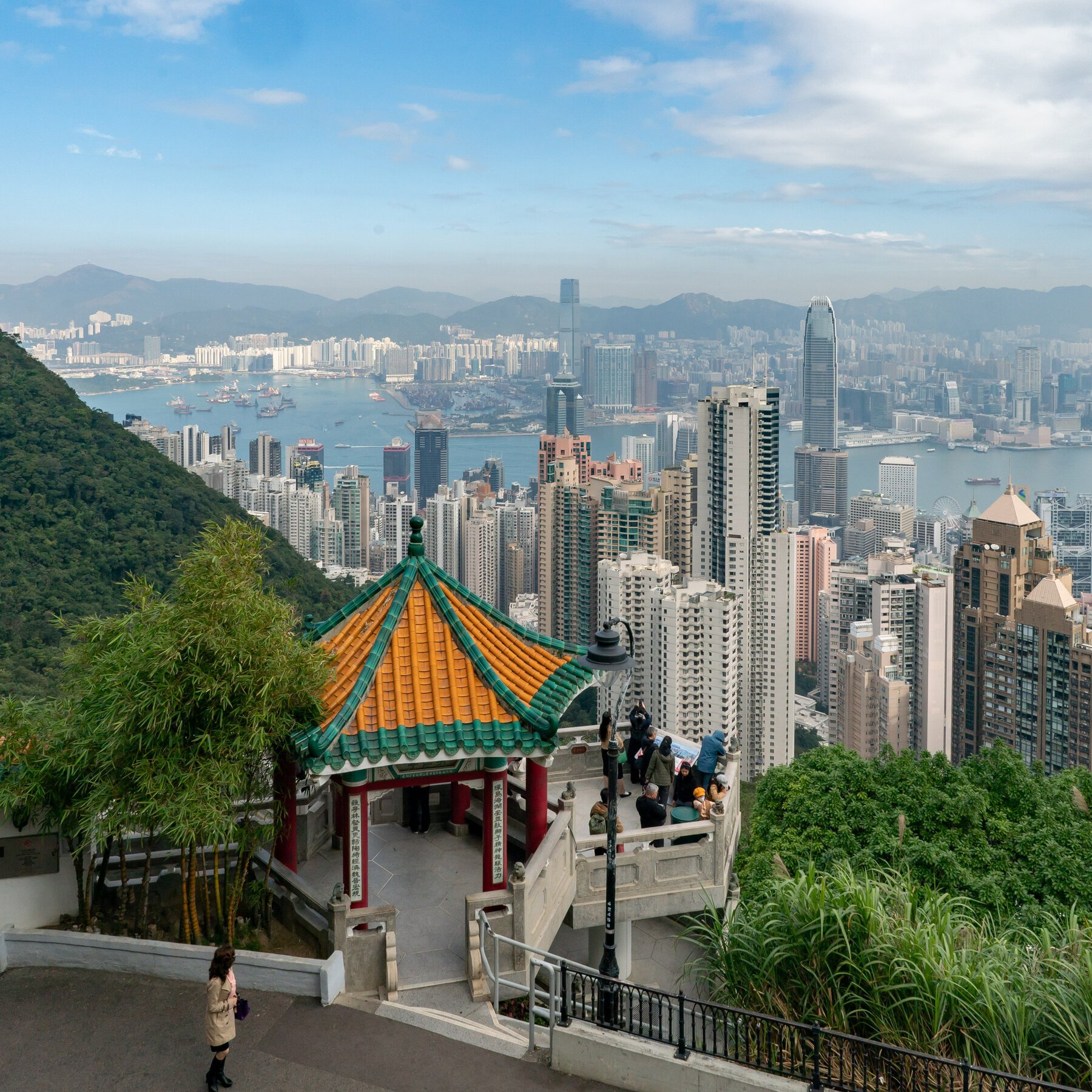
Hong Kong faces a mid-summer heat check on 16 July 2026, as traders bet on the peak Celsius reading recorded by the Hong Kong Observatory. The market currently assigns a 0% implied probability to the YES outcome, suggesting the crowd expects the temperature to fall outside the specific range being wagered on, while Polymarket data shows 29°C as the frontrunner at 39% and 30°C at 28% [1]. This divergence highlights how platform mechanics shape perception: Kalshi and Betfair typically display decimal odds rather than raw implied probabilities, which can obscure low-probability tail risks for casual users, whereas Smarkets emphasises fee transparency that may attract volume away from Polymarket’s higher-cost structure.
Historically, Hong Kong’s July highs cluster between 28°C and 33°C, with the Observatory’s absolute daily maximum rarely dipping below 27°C during peak summer. The current 0% YES probability appears inconsistent with this baseline, suggesting either a mispriced range or a platform-specific liquidity gap. On Kalshi, similar weather markets often show tighter spreads due to regulated market-maker participation, while Betfair’s peer-to-peer model can create wider odds swings when liquidity thins—factors that may explain the stark contrast in implied probability versus Polymarket’s outcome distribution [1].
Traders should monitor the Hong Kong Observatory’s Daily Extract release schedule, as settlement hinges on the finalized “Absolute Daily Max (deg. C)” value once published. No immediate weather announcements are expected, but tropical cyclone activity or monsoon trough shifts could abruptly alter temperature trajectories. Unlike Smarkets, which allows post-event dispute resolution through community voting, Polymarket relies solely on the official source, meaning any delay in the Observatory’s data publication directly stalls settlement—a dependency that platforms with automated oracle feeds, like Kalshi, mitigate more efficiently.
Sources: 1
Methodology
We read Highest temperature in Hong Kong on July 16? from four platform perspectives: Polymarket (on-chain CLOB), Kalshi (CFTC-regulated exchange), Betfair Exchange (sports book exchange), Smarkets (peer-to-peer betting exchange). Polymarket's live mid is the canonical probability; the side-by-side columns benchmark fees, KYC, settlement currency and deposit rails so you can choose the venue that fits your jurisdiction and trade size.
Resolution & payout
Polymarket settles via UMA Optimistic Oracle on Polygon. A proposer posts the outcome with a bond, the two-hour window runs, then the smart contract pays USDC.
Kalshi settles USD through the CFTC-regulated clearinghouse — the cleanest variant, with heavier KYC. Betfair Exchange settles in account currency (GBP/EUR), net of 2-5% commission. Smarkets follows the same model as Betfair with a lower default 2% commission.
FAQ
- What does Polymarket cost vs Kalshi?
- Polymarket: 0% fees, only Polygon network costs (~$0.01/trade). Kalshi: up to 7% per trade plus spread. For high-frequency traders, Polymarket is dramatically cheaper.
- Which platform has the deepest liquidity?
- Polymarket — by a wide margin. Top markets reach $50-500M volume, Kalshi ~$200M cumulative, Betfair similar. Deeper liquidity means your trade moves the quote less.
- Which platform is accessible globally?
- Polymarket is geo-blocked in the US/UK/EU. Kalshi is US-only. Betfair and Smarkets are UK-restricted. Polymarket Alternative has a different geo footprint and routes to Polymarket's order book at 0% fees.
- Are all these platforms regulated?
- No. Kalshi is CFTC-regulated (US). Betfair and Smarkets are UK Gambling Commission licensed. Polymarket operates without explicit regulation — a different risk profile than a regulated sportsbook.
- Which platform supports Klarna/SOFORT?
- Directly: none. Polymarket accepts only USDC on Polygon. Polymarket Alternative offers a fiat on-ramp via Klarna or SOFORT (DE/AT/CH) and converts internally to USDC for the Polymarket order book. T+1 processing.
%22%2F%3E%3Cpath%20d%3D%22M%206%2066%20A%2026%2026%200%200%201%2058%2066%22%20fill%3D%22%23E6B98D%22%20opacity%3D%220.9%22%2F%3E%3Ccircle%20cx%3D%2232%22%20cy%3D%2226%22%20r%3D%2222%22%20fill%3D%22%23F5CBA7%22%2F%3E%3Crect%20x%3D%2210%22%20y%3D%224%22%20width%3D%2244%22%20height%3D%2214%22%20rx%3D%227%22%20fill%3D%22%2314b8a6%22%20opacity%3D%220.9%22%2F%3E%3Crect%20x%3D%228%22%20%20y%3D%2218%22%20width%3D%228%22%20%20height%3D%2218%22%20rx%3D%224%22%20fill%3D%22%2314b8a6%22%20opacity%3D%220.7%22%2F%3E%3Crect%20x%3D%2248%22%20y%3D%2218%22%20width%3D%228%22%20%20height%3D%2218%22%20rx%3D%224%22%20fill%3D%22%2314b8a6%22%20opacity%3D%220.7%22%2F%3E%3C%2Fsvg%3E) and
and%22%2F%3E%3Cpath%20d%3D%22M%206%2066%20A%2026%2026%200%200%201%2058%2066%22%20fill%3D%22%23E6B98D%22%20opacity%3D%220.9%22%2F%3E%3Ccircle%20cx%3D%2232%22%20cy%3D%2226%22%20r%3D%2222%22%20fill%3D%22%23F5CBA7%22%2F%3E%3Cpath%20d%3D%22M%2010%2026%20A%2022%2028%200%200%201%2054%2026%22%20fill%3D%22%2314b8a6%22%20opacity%3D%220.9%22%2F%3E%3C%2Fsvg%3E)
Trade Highest temperature in Hong Kong on July 16? on Polymarket Alternative
Live order book, 0% fees, USDC settlement in seconds.
Open live market →