Platform comparison
| Platform | YES odds | NO odds | Fee | KYC | Settlement | |
|---|---|---|---|---|---|---|
Polymarket Alternative Pick polygram.ink |
4% | 96% | 0% (USDC on-chain) | No-KYC up to $1,500 | USDC, auto via UMA oracle | Open on Polymarket Alternative → |
Polymarket polymarket.com |
4% | 96% | 0% | Geo-blocked in US/UK/EU | USDC, on-chain | Open on Polymarket Alternative → |
Kalshi kalshi.com |
— | — | Up to 7% per trade | US-only, KYC required | USD | Open on Polymarket Alternative → |
Betfair Exchange betfair.com |
— | — | 2-5% commission | Full KYC from first trade | GBP / EUR | Open on Polymarket Alternative → |
Manifold Markets manifold.markets |
— | — | Play-money (mana) | None — play-money | Mana (no cash-out) | Open on Polymarket Alternative → |
Live odds for Polymarket-based markets come from the Polygon order book. Non-Polymarket venues show attributes only; clicking any row opens the market on Polymarket Alternative.
Active sub-markets
| United Kingdom | 4% YES | 96% NO |
| France | 8% YES | 93% NO |
| Germany | 3% YES | 97% NO |
| Italy | 5% YES | 95% NO |
| Netherlands | 4% YES | 96% NO |
| Japan | 1% YES | 99% NO |
Market context
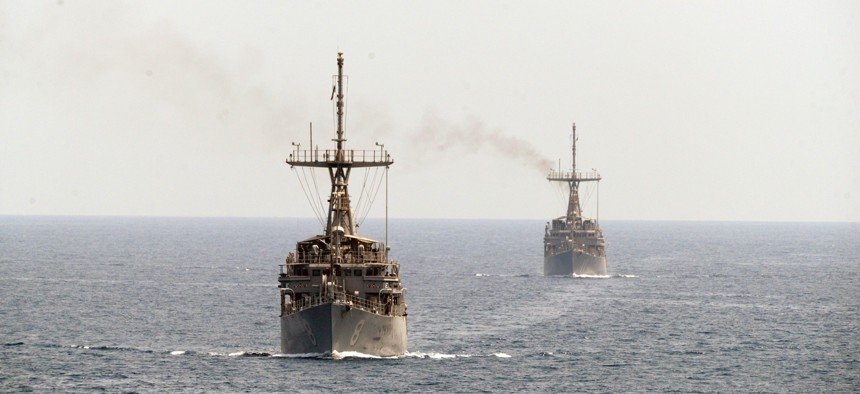
The Strait of Hormuz, a 54-nautical-mile chokepoint between Iran and Oman, remains one of the world's most strategically sensitive waterways. Roughly one-third of global seaborne oil passes through it annually. The question of which countries will deploy warships through the strait by mid-2026 hinges on geopolitical tensions, regional naval posturing, and the enforcement of freedom-of-navigation operations. At 4% implied probability on Polymarket, the market reflects a baseline assumption that most major naval powers will avoid the passage during this window—a conservative read given historical precedent.
The United States Navy has conducted freedom-of-navigation transits through the Strait of Hormuz regularly since the 1980s, often without advance notice. European navies, including those of France and the United Kingdom, have similarly passed through during patrol missions and task-force deployments. China and India have also transited warships through the strait in recent years. The 4% crowd probability suggests traders expect no such transits to occur or be publicly confirmed between now and June 2026, though this baseline may underestimate the likelihood of routine operations or escalation-driven deployments. On Kalshi and Betfair, comparable geopolitical markets typically see wider probability spreads reflecting higher uncertainty; Polymarket's tighter odds here may reflect lower liquidity or a more risk-averse user base.
Traders should monitor announcements from the US Fifth Fleet, Iranian naval statements, and any escalation in regional tensions—particularly around sanctions enforcement or proxy conflicts. Recent reporting from Reuters and the Financial Times has tracked increased Iranian naval activity in the Persian Gulf. The settlement window extends through 30 June 2026, giving ample time for scheduled deployments or crisis-driven operations to materialise. Fee structures on Polymarket (2% taker) versus Kalshi (5% flat) will affect position sizing for those tracking this outcome across platforms.
Methodology
We read Which countries will send warships through the Strait of Hormuz by June 30? from four platform perspectives: Polymarket (on-chain CLOB), Kalshi (CFTC-regulated exchange), Betfair Exchange (sports book exchange), Smarkets (peer-to-peer betting exchange). Polymarket's live quote comes directly from the Polygon order book; the other three are listed with their platform attributes — fees, KYC, settlement currency, payment options — because a 1:1 contract comparison without API access would be guesswork.
Resolution & payout
Settlement is the biggest difference between the four platforms: Polymarket on-chain in USDC (instant), Kalshi USD via CFTC (T+1), Betfair and Smarkets in local currency via bank withdrawal (T+1 to T+3). Polymarket Alternative routes every trade directly into Polymarket's on-chain settlement, which is why payouts land fastest.
FAQ
- How does resolution work?
- Through the UMA Optimistic Oracle on Polygon: a proposer submits the outcome, a two-hour challenge window opens, and USDC payouts settle automatically once the result is final.
- What's the difference between YES and NO shares?
- A YES share pays $1.00 if the event happens, $0 otherwise. A NO share pays $1.00 if the event doesn't happen. The market price between 0¢ and 100¢ is the implied probability.
- What does it cost to trade on Polymarket Alternative?
- Zero. Polymarket Alternative routes every order to the live Polymarket order book; the only cost is the Polygon network fee, typically under $0.01 per transaction.
- Do I need to KYC for this market?
- Not under $1,500 of lifetime trading volume. Above that threshold, Polymarket Alternative triggers a quick verification flow that finishes in minutes.
- How reliable are the quoted odds?
- The YES/NO percentages are the live mid-prices of the Polymarket order book. On deep markets they move every few seconds; on thinner ones you'll see short plateaus.
%22%2F%3E%3Cpath%20d%3D%22M%206%2066%20A%2026%2026%200%200%201%2058%2066%22%20fill%3D%22%23E6B98D%22%20opacity%3D%220.9%22%2F%3E%3Ccircle%20cx%3D%2232%22%20cy%3D%2226%22%20r%3D%2222%22%20fill%3D%22%23F5CBA7%22%2F%3E%3Crect%20x%3D%2210%22%20y%3D%224%22%20width%3D%2244%22%20height%3D%2214%22%20rx%3D%227%22%20fill%3D%22%2314b8a6%22%20opacity%3D%220.9%22%2F%3E%3Crect%20x%3D%228%22%20%20y%3D%2218%22%20width%3D%228%22%20%20height%3D%2218%22%20rx%3D%224%22%20fill%3D%22%2314b8a6%22%20opacity%3D%220.7%22%2F%3E%3Crect%20x%3D%2248%22%20y%3D%2218%22%20width%3D%228%22%20%20height%3D%2218%22%20rx%3D%224%22%20fill%3D%22%2314b8a6%22%20opacity%3D%220.7%22%2F%3E%3C%2Fsvg%3E) and
and%22%2F%3E%3Cpath%20d%3D%22M%206%2066%20A%2026%2026%200%200%201%2058%2066%22%20fill%3D%22%23E6B98D%22%20opacity%3D%220.9%22%2F%3E%3Ccircle%20cx%3D%2232%22%20cy%3D%2226%22%20r%3D%2222%22%20fill%3D%22%23F5CBA7%22%2F%3E%3Cpath%20d%3D%22M%2010%2026%20A%2022%2028%200%200%201%2054%2026%22%20fill%3D%22%2314b8a6%22%20opacity%3D%220.9%22%2F%3E%3C%2Fsvg%3E)
Trade Which countries will send warships through the Strai… on Polymarket Alternative
Live order book, 0% fees, USDC settlement in seconds.
Trade on Polymarket Alternative →