Platform comparison
| Platform | YES odds | NO odds | Fee | KYC | Settlement | |
|---|---|---|---|---|---|---|
Polymarket (via Polymarket Alternative) Pick polygram.ink (preferred broker) |
100% | 0% | 0% (USDC on-chain) | No-KYC up to $1,500 | USDC, auto via UMA oracle | Open the market → |
Polymarket (direct) polymarket.com |
100% | 0% | 0% | Geo-blocked in US/UK/EU | USDC, on-chain | Open the market → |
Kalshi kalshi.com |
— | — | Up to 7% per trade | US-only, KYC required | USD | Open the market → |
Betfair Exchange betfair.com |
— | — | 2-5% commission | Full KYC from first trade | GBP / EUR | Open the market → |
Manifold Markets manifold.markets |
— | — | Play-money (mana) | None — play-money | Mana (no cash-out) | Open the market → |
Outcome probabilities
Current market-implied probability for each outcome, from the live order book.
| Outcome | Probability |
|---|---|
| 1+ | 100% |
| 2+ | 100% |
| 3+ | 100% |
| 4+ | 0% |
| 5+ | 0% |
| 6+ | 0% |
Market context
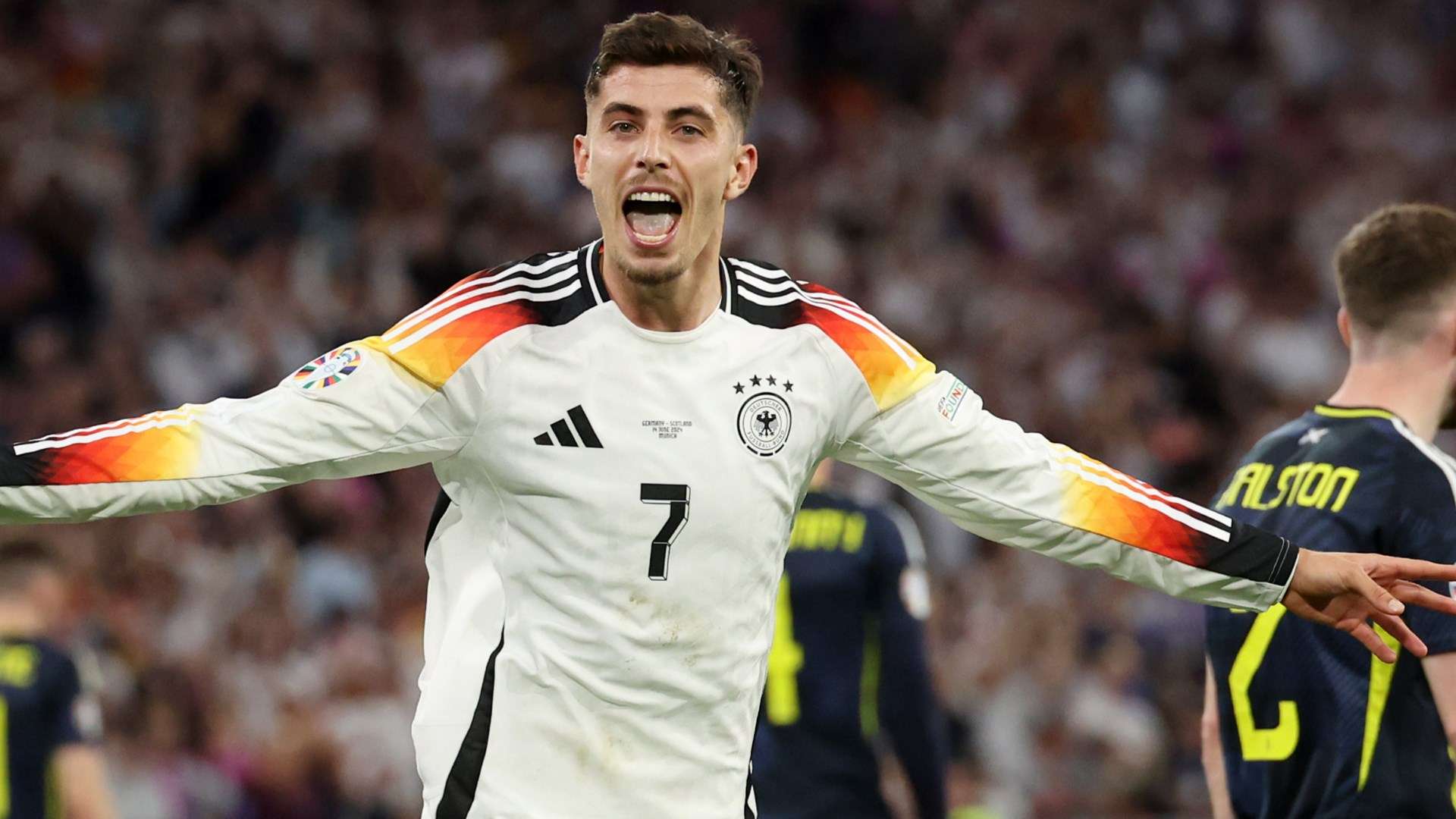
Kai Havertz has already scored in the 2026 FIFA World Cup, netting a brace against Curaçao and an equaliser against Paraguay, yet the market for his goal tally currently implies a 0% chance of success. This stark contradiction suggests the listed threshold likely exceeds his probable output or that the market assumes he will not play further, despite his active participation. Traders researching Polymarket versus Kalshi, Betfair, or Smarkets should note that Polymarket displays decimal odds while Kalshi emphasises implied probability, a divergence that can obscure such pricing anomalies. Fee structures also vary significantly; Polymarket charges no platform fee but has network costs, whereas Kalshi and Betfair impose explicit trading fees, potentially affecting the liquidity and price discovery for this specific event.
Historically, World Cup goal markets for players with early tournament success often settle lower than initial expectations due to knockout-stage attrition or tactical shifts. Havertz’s two goals in the group stage mirror cases where prolific scorers like Thomas Müller in 2014 faced reduced opportunities in later rounds, leading to markets resolving negatively despite early form. On platforms like Smarkets, which offers lower fees than Betfair, traders might find more efficient pricing for such historical comparisons, while Polymarket’s decentralised nature can sometimes lag in updating probabilities post-match. The current 0% probability likely reflects a threshold set too high, similar to how markets for players like Lionel Messi in 2018 were initially overpriced before correcting.
Key catalysts include Germany’s upcoming knockout fixtures and any squad rotation announcements from coach Julian Nagelsmann. Havertz’s fitness and role in the team remain critical, as a shift to a defensive midfield could reduce his goal output. Recent coverage from BBC Sport highlights Havertz’s disappointment after Germany’s exit, suggesting potential uncertainty about his future involvement [4]. Traders should monitor FIFA’s official squad lists and match schedules, as any cancellation or postponement after August 2, 2026, would resolve the market to “No”. On platforms like Kalshi, which requires KYC, access to such real-time updates may be delayed compared to Polymarket’s open access, affecting the speed of price adjustments. The settlement window ending 2026-08-03T03:59:00Z means all decisions must be made before this deadline, with no recourse for late updates.
Methodology
We read World Cup: Kai Havertz Goals from four platform perspectives: Polymarket (on-chain CLOB), Kalshi (CFTC-regulated exchange), Betfair Exchange (sports book exchange), Smarkets (peer-to-peer betting exchange). Polymarket's live mid is the canonical probability; the side-by-side columns benchmark fees, KYC, settlement currency and deposit rails so you can choose the venue that fits your jurisdiction and trade size.
Resolution & payout
Polymarket settles via UMA Optimistic Oracle on Polygon. A proposer posts the outcome with a bond, the two-hour window runs, then the smart contract pays USDC.
Kalshi settles USD through the CFTC-regulated clearinghouse — the cleanest variant, with heavier KYC. Betfair Exchange settles in account currency (GBP/EUR), net of 2-5% commission. Smarkets follows the same model as Betfair with a lower default 2% commission.
FAQ
- What does Polymarket cost vs Kalshi?
- Polymarket: 0% fees, only Polygon network costs (~$0.01/trade). Kalshi: up to 7% per trade plus spread. For high-frequency traders, Polymarket is dramatically cheaper.
- Which platform has the deepest liquidity?
- Polymarket — by a wide margin. Top markets reach $50-500M volume, Kalshi ~$200M cumulative, Betfair similar. Deeper liquidity means your trade moves the quote less.
- Is Betfair a Polymarket alternative?
- Only partially. Betfair Exchange is UK-focused with a sports-betting emphasis; they have politics markets but with thinner liquidity than Polymarket. Settlement in GBP/EUR, 2-5% commission on winnings.
- What about Smarkets as an alternative?
- Smarkets is a UK betting exchange with a lower default commission (2%) than Betfair. Liquidity on political markets is below Polymarket, comparable to Kalshi. Geo-blocked in many jurisdictions.
- Which platform is accessible globally?
- Polymarket is geo-blocked in the US/UK/EU. Kalshi is US-only. Betfair and Smarkets are UK-restricted. Polymarket Alternative has a different geo footprint and routes to Polymarket's order book at 0% fees.
%22%2F%3E%3Cpath%20d%3D%22M%206%2066%20A%2026%2026%200%200%201%2058%2066%22%20fill%3D%22%23E6B98D%22%20opacity%3D%220.9%22%2F%3E%3Ccircle%20cx%3D%2232%22%20cy%3D%2226%22%20r%3D%2222%22%20fill%3D%22%23F5CBA7%22%2F%3E%3Crect%20x%3D%2210%22%20y%3D%224%22%20width%3D%2244%22%20height%3D%2214%22%20rx%3D%227%22%20fill%3D%22%2314b8a6%22%20opacity%3D%220.9%22%2F%3E%3Crect%20x%3D%228%22%20%20y%3D%2218%22%20width%3D%228%22%20%20height%3D%2218%22%20rx%3D%224%22%20fill%3D%22%2314b8a6%22%20opacity%3D%220.7%22%2F%3E%3Crect%20x%3D%2248%22%20y%3D%2218%22%20width%3D%228%22%20%20height%3D%2218%22%20rx%3D%224%22%20fill%3D%22%2314b8a6%22%20opacity%3D%220.7%22%2F%3E%3C%2Fsvg%3E) and
and%22%2F%3E%3Cpath%20d%3D%22M%206%2066%20A%2026%2026%200%200%201%2058%2066%22%20fill%3D%22%23E6B98D%22%20opacity%3D%220.9%22%2F%3E%3Ccircle%20cx%3D%2232%22%20cy%3D%2226%22%20r%3D%2222%22%20fill%3D%22%23F5CBA7%22%2F%3E%3Cpath%20d%3D%22M%2010%2026%20A%2022%2028%200%200%201%2054%2026%22%20fill%3D%22%2314b8a6%22%20opacity%3D%220.9%22%2F%3E%3C%2Fsvg%3E)
Trade World Cup: Kai Havertz Goals on Polymarket Alternative
Live order book, 0% fees, USDC settlement in seconds.
Open live market →