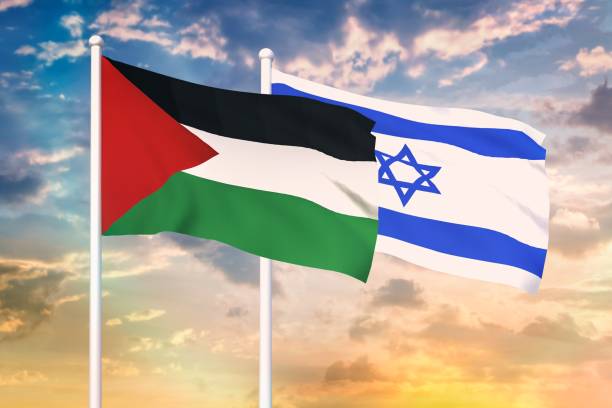
Platform comparison
| Platform | YES odds | NO odds | Fee | KYC | Settlement | |
|---|---|---|---|---|---|---|
Polymarket (via Polymarket Alternative) Pick polygram.ink (preferred broker) |
65% | 35% | 0% (USDC on-chain) | No-KYC up to $1,500 | USDC, auto via UMA oracle | Open the market → |
Polymarket (direct) polymarket.com |
65% | 35% | 0% | Geo-blocked in US/UK/EU | USDC, on-chain | Open the market → |
Kalshi kalshi.com |
— | — | Up to 7% per trade | US-only, KYC required | USD | Open the market → |
Betfair Exchange betfair.com |
— | — | 2-5% commission | Full KYC from first trade | GBP / EUR | Open the market → |
Manifold Markets manifold.markets |
— | — | Play-money (mana) | None — play-money | Mana (no cash-out) | Open the market → |
Outcome probabilities
Current market-implied probability for each outcome, from the live order book.
| Outcome | Probability |
|---|---|
| December 31 | 65% |
| July 31 | 9% |
| October 31 | 0% |
| December 31 | 0% |
| November 30 | 0% |
| March 31, 2026 | 0% |
| January 31 | 0% |
| February 28 | 0% |
| June 30 | 0% |
Market context
The real-world question is whether Israel and Hamas can move from the existing truce into a publicly announced second-phase agreement covering withdrawal, disarmament, and new Gaza governance. The current **65%** crowd-implied yes price is notably firm for a deal that still depends on mutual concessions over issues that have repeatedly stalled in talks, so the market is pricing in some expectation of continued mediation rather than an imminent collapse.
Historically, phase-two Gaza pricing has tended to overstate momentum when early hostage or prisoner steps are completed but the harder political terms remain unresolved. Reuters, CNN and the Security Council Report all describe the second phase as the point where the process becomes most fragile, with disarmament, a phased IDF withdrawal and transitional authority all still unfinished or stalled.[2][3][4] That pattern matters for platform comparison: on Polymarket, the implied probability view is immediately visible, while on Kalshi and Betfair you are effectively reading through contract prices or decimal odds after fees; Smarkets typically shows tighter, exchange-style pricing but still leaves execution and commission to factor in. In practice, the same headline can look slightly different across books once spreads, fees and KYC access are applied.
Catalysts to watch are official statements from Israel, Hamas, Egypt, Qatar and the US, plus mediator meetings in Cairo. Recent reports say Israeli and Egyptian military officials held Cairo talks on the second phase, while other outlets said Hamas had reached an agreement and would issue a formal statement, with Egypt’s state media also referring to a weapons-inventory plan and gradual storage arrangement.[1][6][8][9] If those reports are followed by a joint, publicly announced text, the market would likely move quickly; if Israel withholds confirmation or the language remains non-binding, the price is more likely to drift back towards the stalled baseline.[16]
Methodology
This page compares Israel x Hamas Ceasefire Phase II by 2026? specifically across Polymarket, Kalshi, Betfair Exchange and Smarkets. The live probability is the Polymarket mid; the comparison columns summarise each venue's fee structure, KYC, settlement currency and payment rails. Every CTA routes to Polymarket Alternative, which mirrors the Polymarket order book at 0% fees.
Resolution & payout
Polymarket settles via UMA Optimistic Oracle on Polygon. A proposer posts the outcome with a bond, the two-hour window runs, then the smart contract pays USDC.
Kalshi settles USD through the CFTC-regulated clearinghouse — the cleanest variant, with heavier KYC. Betfair Exchange settles in account currency (GBP/EUR), net of 2-5% commission. Smarkets follows the same model as Betfair with a lower default 2% commission.
FAQ
- Polymarket vs Kalshi — which is better?
- Depends on your location. Kalshi is CFTC-regulated, US-only with full KYC. Polymarket is global, on-chain, no KYC up to $1,500. Polymarket has ~10x higher liquidity but higher regulatory risk.
- What does Polymarket cost vs Kalshi?
- Polymarket: 0% fees, only Polygon network costs (~$0.01/trade). Kalshi: up to 7% per trade plus spread. For high-frequency traders, Polymarket is dramatically cheaper.
- Which platform has the deepest liquidity?
- Polymarket — by a wide margin. Top markets reach $50-500M volume, Kalshi ~$200M cumulative, Betfair similar. Deeper liquidity means your trade moves the quote less.
- What about Smarkets as an alternative?
- Smarkets is a UK betting exchange with a lower default commission (2%) than Betfair. Liquidity on political markets is below Polymarket, comparable to Kalshi. Geo-blocked in many jurisdictions.
- Which platform supports Klarna/SOFORT?
- Directly: none. Polymarket accepts only USDC on Polygon. Polymarket Alternative offers a fiat on-ramp via Klarna or SOFORT (DE/AT/CH) and converts internally to USDC for the Polymarket order book. T+1 processing.
%22%2F%3E%3Cpath%20d%3D%22M%206%2066%20A%2026%2026%200%200%201%2058%2066%22%20fill%3D%22%23E6B98D%22%20opacity%3D%220.9%22%2F%3E%3Ccircle%20cx%3D%2232%22%20cy%3D%2226%22%20r%3D%2222%22%20fill%3D%22%23F5CBA7%22%2F%3E%3Crect%20x%3D%2210%22%20y%3D%224%22%20width%3D%2244%22%20height%3D%2214%22%20rx%3D%227%22%20fill%3D%22%2314b8a6%22%20opacity%3D%220.9%22%2F%3E%3Crect%20x%3D%228%22%20%20y%3D%2218%22%20width%3D%228%22%20%20height%3D%2218%22%20rx%3D%224%22%20fill%3D%22%2314b8a6%22%20opacity%3D%220.7%22%2F%3E%3Crect%20x%3D%2248%22%20y%3D%2218%22%20width%3D%228%22%20%20height%3D%2218%22%20rx%3D%224%22%20fill%3D%22%2314b8a6%22%20opacity%3D%220.7%22%2F%3E%3C%2Fsvg%3E) and
and%22%2F%3E%3Cpath%20d%3D%22M%206%2066%20A%2026%2026%200%200%201%2058%2066%22%20fill%3D%22%23E6B98D%22%20opacity%3D%220.9%22%2F%3E%3Ccircle%20cx%3D%2232%22%20cy%3D%2226%22%20r%3D%2222%22%20fill%3D%22%23F5CBA7%22%2F%3E%3Cpath%20d%3D%22M%2010%2026%20A%2022%2028%200%200%201%2054%2026%22%20fill%3D%22%2314b8a6%22%20opacity%3D%220.9%22%2F%3E%3C%2Fsvg%3E)
Trade Israel x Hamas Ceasefire Phase II by 2026? on Polymarket Alternative
Live order book, 0% fees, USDC settlement in seconds.
Open live market →